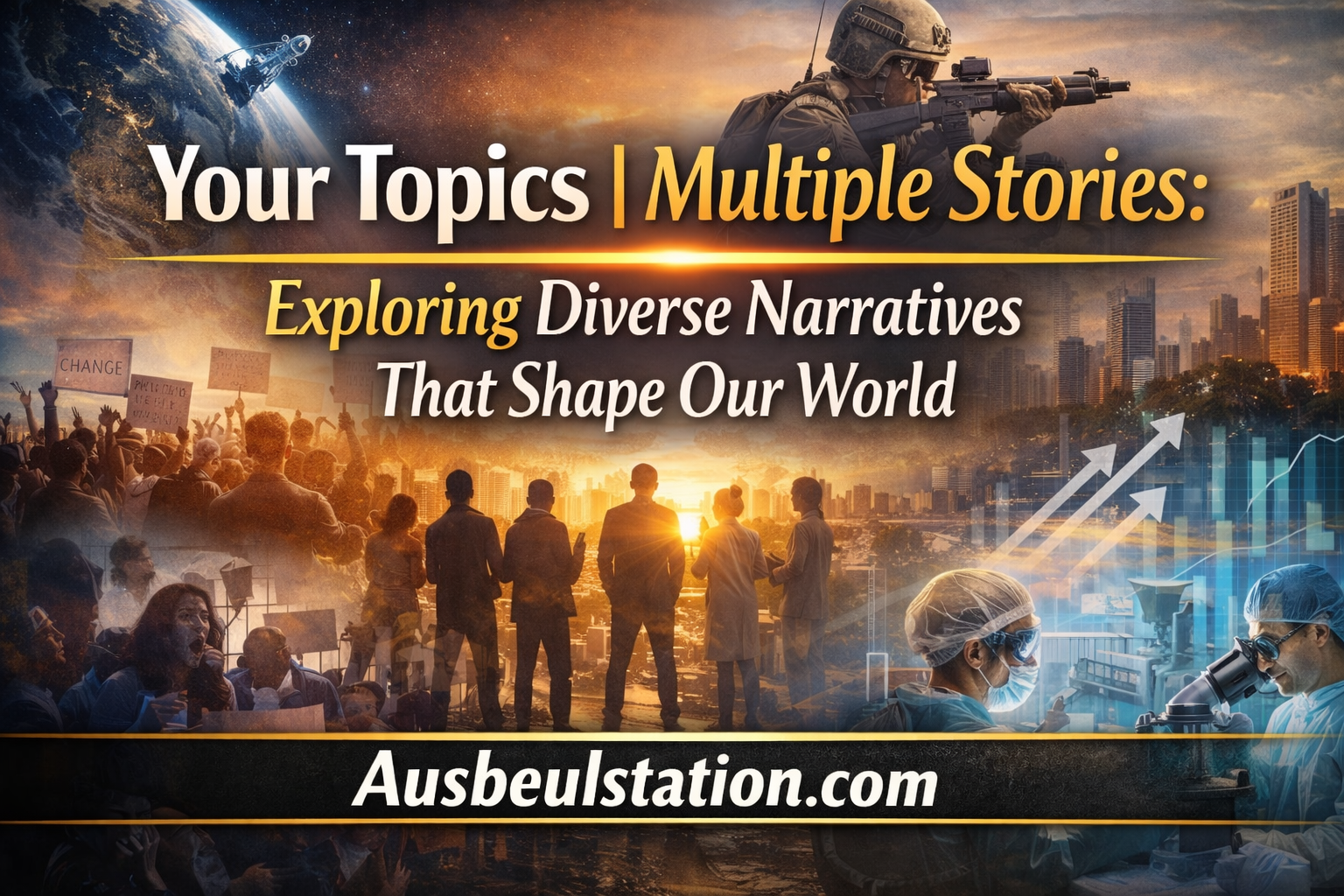
Your Topics | Multiple Stories: Exploring Diverse Narratives That Shape Our World
The modern digital era, information flows faster than ever before. Every day, millions of people search the internet to learn, explore ideas, and understand the world through different perspectives. One of the most engaging ways to present information online is through the concept of “your topics | multiple stories.” This approach focuses on covering a wide range of subjects while presenting them through several narratives, viewpoints, and experiences. Instead of limiting content to a single perspective, it embraces diversity in storytelling, allowing readers to gain a deeper and more balanced understanding of any topic.
From news platforms to blogs, educational websites to entertainment media, the your topics | multiple stories method has become an important strategy for delivering meaningful content. It ensures that readers are exposed to various angles of a subject, making the information richer, more engaging, and more useful. In this article, we will explore what this concept means, why it matters, and how it influences the way we consume and create content today.
The Concept of “Your Topics | Multiple Stories”
your topics | multiple stories refers to presenting a single subject through different narratives or viewpoints. Instead of focusing on just one story or interpretation, the idea is to highlight multiple perspectives related to the same theme. This approach acknowledges that most topics are complex and cannot be fully understood through a single lens.
For example, consider a topic like climate change, technological innovation, or cultural trends. Each of these subjects affects different groups of people in different ways. A scientist might discuss the environmental data behind climate change, while a farmer might share how changing weather patterns affect crops. A technology expert might focus on innovation, while consumers talk about how technology changes daily life. By combining these viewpoints, your topics | multiple stories creates a more comprehensive narrative.
This storytelling method also reflects how people naturally understand the world. Human experiences vary widely, and when multiple voices are included in a discussion, readers gain insights that go beyond simple facts. They begin to see how ideas connect with real lives, emotions, and social changes.
Why Multiple Stories Make Content More Powerful
One of the biggest advantages of the your topics | multiple stories approach is that it adds depth and authenticity to content. When readers encounter different viewpoints within the same article or topic, they are more likely to feel that the information is balanced and credible.
Single-perspective content can sometimes feel incomplete or biased. For instance, a story about economic growth might focus solely on statistics and government policies. However, when multiple stories are included, readers might also learn about how businesses, workers, and communities experience those changes in real life. This broader narrative provides context and helps people understand the full picture.
Diverse storytelling makes content more engaging. Readers often connect emotionally with personal stories, experiences, and real-life examples. By presenting different narratives within the same topic, content creators can maintain the reader’s interest while delivering valuable information.
Another important benefit is that multiple stories encourage critical thinking. When readers see several perspectives on the same issue, they naturally begin comparing ideas, questioning assumptions, and forming their own opinions. This intellectual engagement is a key reason why the your topics | multiple stories format is widely used in journalism, education, and digital media.
The Role of Storytelling in Modern Information Sharing
Storytelling has always been a powerful tool for sharing knowledge. Long before the internet existed, cultures around the world relied on stories to pass down history, traditions, and lessons. Today, digital platforms have expanded the reach of storytelling, making it possible for millions of people to share their voices.
Within this environment, your topics | multiple stories has become a natural evolution of traditional storytelling. Instead of a single narrator, modern content often features multiple voices contributing to the narrative. Blogs may include interviews, expert opinions, and personal experiences all within one article. News platforms may cover the same event through political, economic, and social perspectives.
This layered storytelling helps audiences connect with information on multiple levels. Facts and statistics provide knowledge, while personal stories create emotional connections. When combined effectively, these elements transform ordinary content into something meaningful and memorable.
Digital storytelling often incorporates multimedia elements such as videos, images, and audio recordings. These formats further enrich the multiple stories approach by allowing readers to experience narratives visually and emotionally.
How Content Creators Use the “Your Topics | Multiple Stories” Approach
Content creators, bloggers, journalists, and educators frequently use the your topics | multiple stories method to produce engaging material. By structuring content around a central theme while including diverse narratives, they can appeal to a broader audience.
One common technique is to divide a topic into several sub-stories. For instance, a technology article might include sections about innovation, business impact, user experiences, and future predictions. Each section offers a different perspective while still contributing to the overall theme.
Another approach involves featuring real-life experiences. Personal accounts, interviews, and case studies bring authenticity to content. When readers encounter genuine stories from individuals affected by a topic, the information feels more relatable and trustworthy.
Content creators also use data and research alongside storytelling. Statistics provide credibility, while narratives help readers understand what those numbers mean in everyday life. This combination ensures that the article remains informative while still engaging.
The success of many modern media platforms is closely tied to their ability to present content through multiple narratives. Readers increasingly expect balanced, comprehensive coverage rather than one-dimensional explanations.
The Impact on Readers and Online Audiences
The your topics | multiple stories approach significantly influences how audiences interact with content. In a world filled with endless information, readers are more likely to engage with articles that offer depth and variety.
When people encounter multiple perspectives within the same topic, they feel that the content respects their intelligence and curiosity. Rather than presenting a single conclusion, the article invites readers to explore ideas and form their own interpretations.
This method also helps build trust. Online audiences are often skeptical of information that appears overly simplistic or one-sided. By including diverse narratives, content creators demonstrate transparency and openness, which strengthens credibility.
Another important impact is increased learning. Exposure to different viewpoints encourages readers to think beyond their usual perspectives. They may discover new ideas, understand unfamiliar experiences, and develop greater empathy for other.
your topics | multiple stories model is especially valuable. Teachers and researchers often present case studies, historical narratives, and personal experiences alongside academic information. This approach helps students connect theoretical knowledge with real-world situations.
Challenges of Managing Multiple Narratives
The your topics | multiple stories approach offers many advantages, it also presents certain challenges. One of the biggest difficulties is maintaining clarity while presenting diverse viewpoints. If too many narratives are included without proper structure, the content may become confusing or overwhelming.
Effective organization is essential. Writers must ensure that each story contributes to the central theme and flows logically within the article. Clear headings, well-structured paragraphs, and thoughtful transitions help maintain readability.
Another challenge is maintaining balance. When multiple perspectives are presented, writers must avoid favoring one narrative too strongly while neglecting others. Fair representation is important to ensure that the content remains informative and unbiased.
Finally, research plays a crucial role. To present multiple stories accurately, writers must gather reliable information and verify sources. Without careful research, the narratives may lack credibility or fail to represent the topic properly.
The Future of “Your Topics | Multiple Stories” in Digital Media
As digital media continues to evolve, the your topics | multiple stories model is likely to become even more important. Modern audiences value authenticity, diversity, and comprehensive information. Content that reflects these qualities is more likely to attract attention and build lasting engagement.
Emerging technologies may further enhance this storytelling style. Interactive articles, virtual reality experiences, and multimedia storytelling platforms can allow readers to explore multiple narratives in immersive ways. For example, an interactive feature might allow users to switch between different perspectives within the same story.
Social media also plays a role in expanding the reach of multiple narratives. Individuals from around the world can share their experiences instantly, contributing new voices to global conversations. This dynamic exchange of ideas strengthens the principle of presenting multiple stories within a single topic.
For content creators, the future will involve blending traditional storytelling techniques with modern digital tools. Those who can effectively combine information, narrative, and diverse viewpoints will continue to capture the interest of online audiences.
Read More: Jack Touzet: A Rising Name in Business, Influence, and Modern Leadership
Conclusion
The concept of your topics | multiple stories represents a powerful approach to sharing information in today’s digital world. By presenting diverse perspectives within a single topic, this method enriches content, enhances understanding, and encourages meaningful engagement. Readers benefit from deeper insights, balanced viewpoints, and narratives that connect information with real-life experiences.
In an era where information is abundant but attention is limited, storytelling remains one of the most effective ways to communicate ideas. When multiple stories come together around a shared theme, they create a richer narrative that reflects the complexity of the world we live in.
Your topics | multiple stories is more than just a writing strategy—it is a way of understanding knowledge itself. By embracing diverse voices and perspectives, we move closer to a fuller, more accurate picture of the subjects that shape our lives and our future.