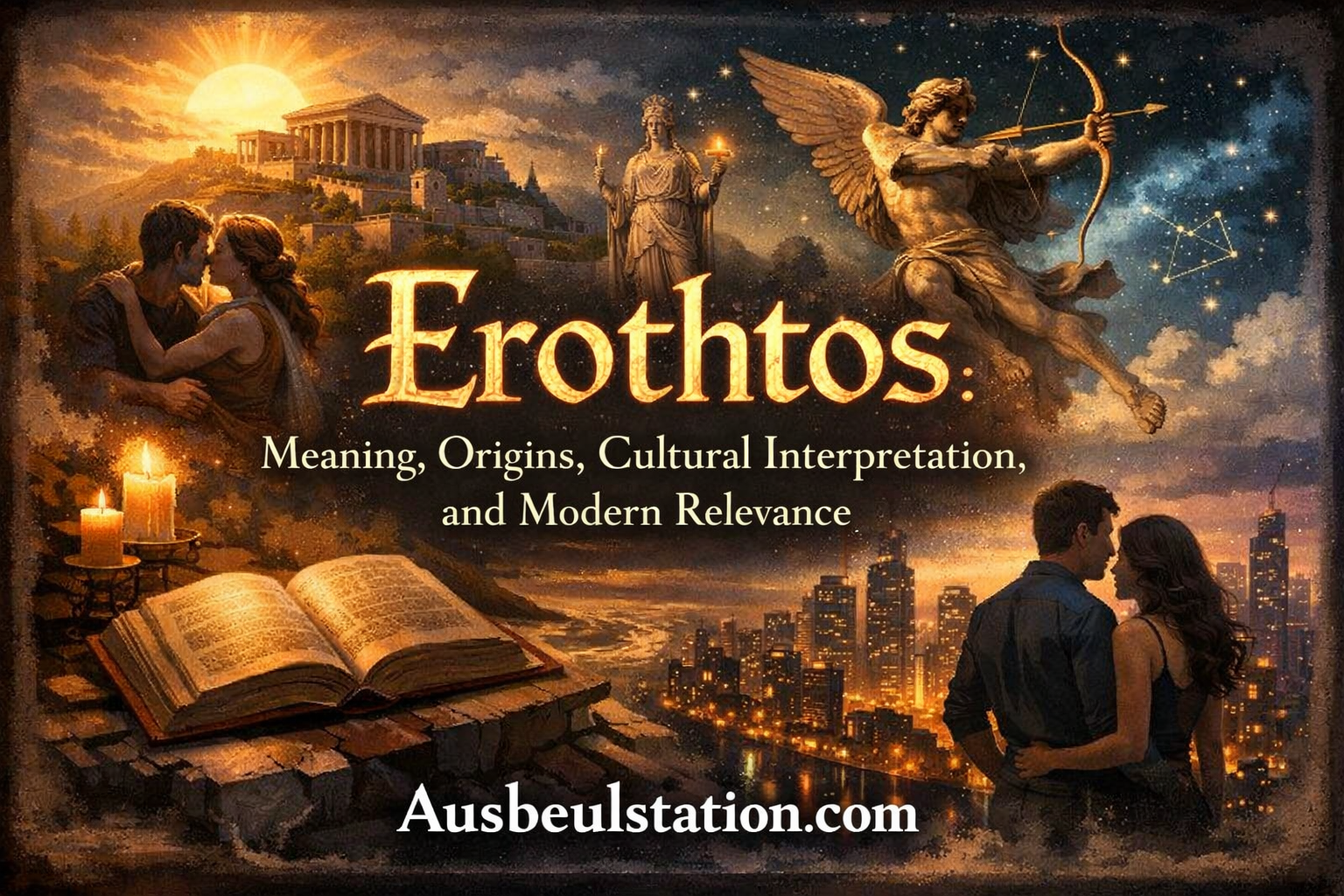
Erothtos: Meaning, Origins, Cultural Interpretation, and Modern Relevance
The term erothtos has recently begun attracting curiosity across online discussions, philosophical forums, and cultural conversations. Although not widely established in traditional dictionaries, erothtos is increasingly interpreted as a conceptual expression connected to emotion, attraction, identity, and the deeper human experience of connection. As language evolves alongside society, new words often emerge to describe feelings or social dynamics that older vocabulary cannot fully capture. Erothtos represents one of those evolving ideas — a concept that blends emotional awareness, personal authenticity, and interpersonal connection into a broader philosophical framework.
This article explores erothtos in depth, examining its possible origins, symbolic meaning, psychological implications, cultural relevance, and why it continues to gain attention in modern discourse.
Understanding the Concept of Erothtos
Erothtos can be understood as a state of emotional or intellectual attraction that transcends superficial interaction. Rather than referring solely to physical attraction, erothtos describes a multidimensional connection between individuals, ideas, or experiences. It highlights the human desire to seek meaning, closeness, and resonance beyond surface-level relationships.
Erothtos combines elements of curiosity, admiration, empathy, and emotional openness. It suggests an attraction rooted in understanding rather than possession. This distinction makes erothtos different from traditional notions of desire or affection, emphasizing awareness and mutual recognition instead of intensity alone.
People discussing erothtos often describe it as the moment when conversation feels effortless, when thoughts align naturally, or when shared experiences create a sense of emotional familiarity. It reflects the subtle yet powerful energy that forms when individuals genuinely engage with one another’s perspectives and emotions.
Possible Linguistic and Philosophical Origins
Although erothtos is not firmly tied to a single historical language, many observers associate its sound and structure with ancient philosophical terminology. Words related to emotion, questioning, and existential reflection appear throughout classical linguistic traditions, suggesting that erothtos may symbolically draw from multiple influences rather than one definitive source.
Erothtos echoes long-standing human inquiries about connection and meaning. Throughout history, thinkers have attempted to explain why humans seek relationships, community, and emotional resonance. Erothtos fits into this intellectual tradition by offering a modern label for an ancient human experience — the search for authentic understanding between self and others.
Rather than functioning as a rigid definition, erothtos operates more like a philosophical lens. It encourages people to examine how attraction, curiosity, and emotional awareness shape human interactions. This flexible interpretation may explain why the term resonates with contemporary audiences exploring identity, mindfulness, and personal growth.
Erothtos and Emotional Intelligence
One of the most significant aspects of erothtos lies in its relationship with emotional intelligence. Emotional intelligence refers to the ability to recognize, understand, and manage emotions while responding effectively to others. Erothtos represents an advanced expression of this ability, emphasizing mutual awareness and emotional sensitivity.
When individuals experience erothtos, they often demonstrate active listening, empathy, and respect for emotional boundaries. The connection is not forced or performative; instead, it develops organically through genuine engagement. This aligns with modern psychological research suggesting that meaningful relationships depend less on similarity and more on emotional attunement.
Erothtos encourages individuals to move beyond reactive communication and toward intentional interaction. By valuing emotional presence, people cultivate deeper relationships that prioritize understanding over judgment. In this sense, erothtos can be viewed as both an emotional experience and a personal skill developed through self-awareness.
The Role of Erothtos in Human Relationships
Relationships today exist in a rapidly changing social environment shaped by technology, globalization, and evolving cultural expectations. Within this landscape, erothtos offers a framework for redefining connection.
Traditional relationship models often emphasized roles, obligations, or social expectations. Erothtos shifts focus toward authenticity and shared emotional experience. It highlights the importance of feeling genuinely seen and understood rather than merely fulfilling societal norms.
Erothtos may appear as intellectual companionship or emotional support that feels naturally balanced. In romantic contexts, it can manifest as deep mutual respect, curiosity about each other’s inner worlds, and an enduring sense of fascination. Even professional relationships may reflect erothtos when collaboration is guided by trust, creativity, and shared purpose.
The concept suggests that meaningful relationships are not defined solely by duration or labels but by the depth of emotional engagement participants bring to the interaction.
Erothtos in Digital Culture and Online Communities
The rise of digital communication has dramatically transformed how people connect. Social media platforms, online forums, and virtual communities allow individuals from different cultures and backgrounds to interact instantly. Within this environment, erothtos has gained relevance as people search for authenticity amid constant connectivity.
Online interactions often struggle with superficial engagement — quick reactions, brief conversations, and curated identities. Erothtos challenges this pattern by encouraging intentional communication even within digital spaces. Users increasingly seek conversations that feel genuine rather than transactional.
Communities built around shared interests, creative collaboration, or intellectual exchange frequently demonstrate elements of erothtos. Participants bond through mutual curiosity and shared enthusiasm, forming meaningful connections despite physical distance. This illustrates how erothtos adapts to modern communication while preserving timeless human emotional needs.
Psychological Benefits Associated with Erothtos
Experiencing erothtos can contribute positively to mental well-being. Humans naturally seek belonging and emotional validation, and connections characterized by understanding and empathy help fulfill these psychological needs.
Individuals who cultivate erothtos-like relationships often report increased confidence, reduced loneliness, and stronger emotional resilience. When people feel understood, they become more comfortable expressing vulnerability, which strengthens emotional health.
Erothtos encourages reflective thinking. By engaging deeply with others’ perspectives, individuals expand their worldview and develop greater self-awareness. This process supports personal growth, creativity, and adaptability — qualities increasingly important in modern life.
Psychologically, erothtos can therefore be seen as a bridge between interpersonal connection and individual development.
Erothtos as a Cultural and Social Symbol
Beyond personal relationships, erothtos may also function as a broader cultural symbol. Societies continuously redefine values related to identity, empathy, and communication. Concepts like erothtos emerge when communities attempt to describe new social experiences that traditional language cannot fully express.
Erothtos might represent the emotional atmosphere between creator and audience. Writers, musicians, and visual artists often aim to evoke a sense of recognition — a feeling that the audience deeply relates to the work. This shared emotional response mirrors the essence of erothtos.
Social movements emphasizing inclusivity, understanding, and emotional awareness align with the values embedded in erothtos. The concept reflects a cultural shift toward prioritizing emotional authenticity and meaningful dialogue over rigid social structures.
Challenges and Misinterpretations of Erothtos
Like many emerging concepts, erothtos can be misunderstood. Some interpretations mistakenly reduce it to simple attraction or romantic intensity, overlooking its broader emotional and intellectual dimensions. Others may treat it as an abstract trend rather than a meaningful framework for understanding human interaction.
Another challenge lies in balancing emotional openness with personal boundaries. While erothtos encourages deep connection, healthy relationships still require individuality and respect for personal space. Misapplying the concept could lead to emotional overdependence rather than mutual growth.
Recognizing erothtos as a dynamic process rather than a fixed state helps avoid these misunderstandings. It is not a permanent condition but an evolving experience shaped by communication, empathy, and shared understanding.
The Growing Interest in Erothtos
The increasing popularity of erothtos reflects broader societal changes. People today often seek depth in a world characterized by speed and distraction. As conversations about mental health, authenticity, and emotional intelligence become more mainstream, concepts like erothtos naturally gain traction.
Younger generations, in particular, value meaningful interaction and emotional transparency. They gravitate toward language that captures nuanced feelings and complex relational experiences. Erothtos fulfills this need by offering a term that acknowledges emotional depth without limiting it to specific relationship categories.
Its growth also demonstrates how language adapts alongside cultural evolution. New words emerge when collective experiences demand new forms of expression.
Applying Erothtos in Everyday Life
Erothtos is only the first step; applying its principles can transform daily interactions. Practicing active listening, showing genuine curiosity about others, and communicating openly all contribute to experiences aligned with erothtos.
Small actions — maintaining eye contact during conversations, acknowledging emotions, or engaging thoughtfully with ideas — help foster deeper connections. Over time, these habits cultivate environments where people feel valued and understood.
Erothtos begins with self-connection. Individuals who understand their own emotions and values are better equipped to form authentic relationships with others. Self-awareness therefore becomes the foundation upon which erothtos develops.
Read More:Rowdy Oxford Integris: The Concept, Background, and Growing Interest
Conclusion
Erothtos represents more than a trending term; it symbolizes an evolving understanding of how humans connect in an increasingly complex world. By emphasizing emotional intelligence, authenticity, and mutual recognition, erothtos captures the essence of meaningful interaction.
As society continues to navigate technological change and cultural transformation, the desire for genuine connection remains constant. Erothtos provides language for that desire — a way to describe moments when understanding feels effortless and relationships transcend superficial boundaries.
Erothtos reminds us that human connection is not defined solely by proximity or labels but by presence, empathy, and shared emotional experience. Whether expressed through friendship, creativity, collaboration, or introspection, erothtos highlights the enduring human pursuit of connection that feels real, thoughtful, and deeply alive.