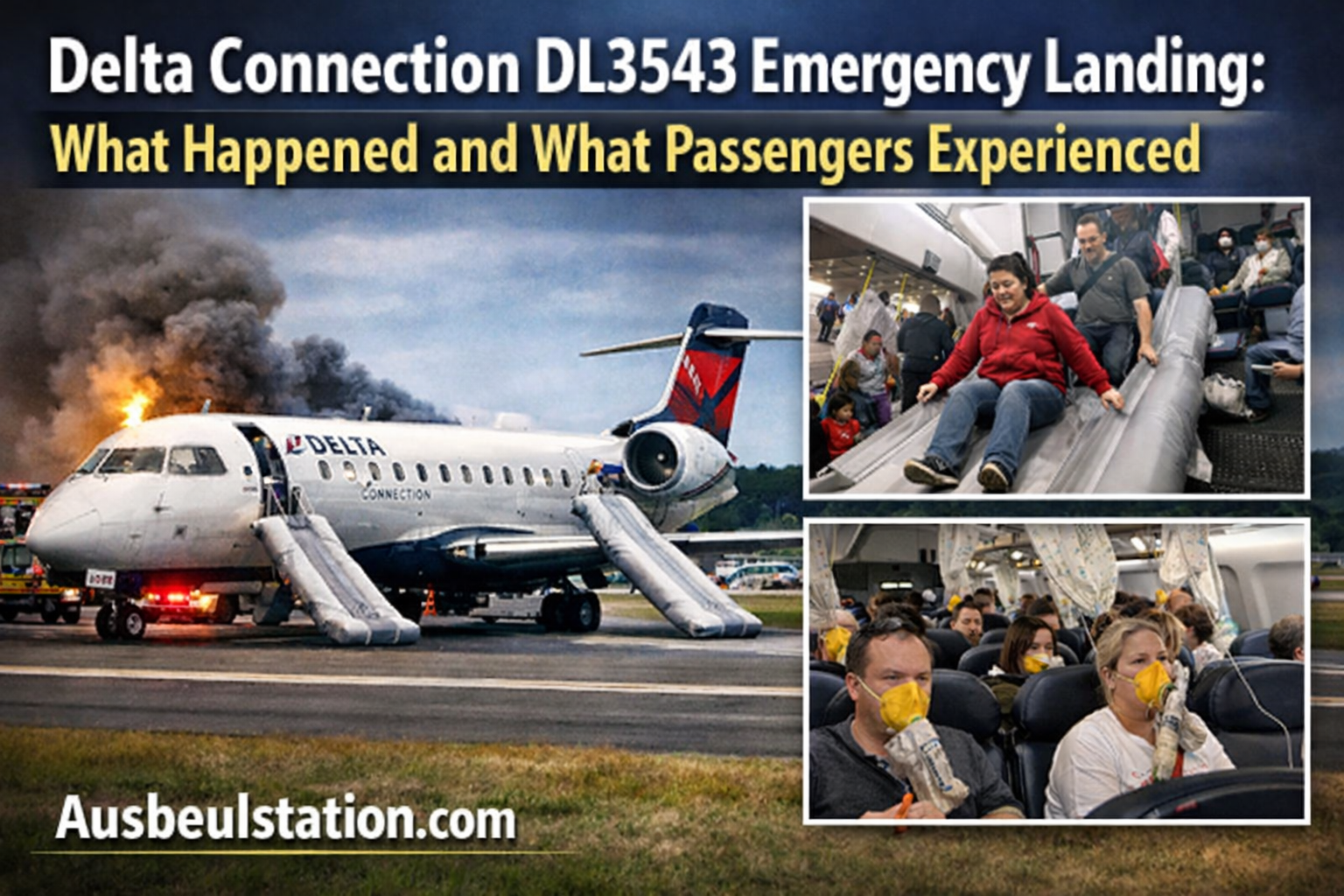
Delta Connection DL3543 Emergency Landing: What Happened and What Passengers Experienced
Air travel is widely considered one of the safest forms of transportation, yet unexpected incidents occasionally remind travelers how important aviation safety procedures truly are. One such event that attracted public attention was the Delta Connection DL3543 emergency landing, a situation that raised questions about aircraft safety, pilot response, and airline emergency preparedness.
This article provides a complete overview of the incident, including what led to the emergency landing, how the crew handled the situation, passenger reactions, and the broader importance of aviation safety systems.
Overview of Delta Connection Flight DL3543
Delta Connection flights operate under the regional airline network affiliated with Delta Air Lines. These flights are typically run by regional carriers that partner with Delta to provide short-distance and domestic routes across the United States.
Flight DL3543 was a routine regional journey scheduled to transport passengers safely between two domestic destinations. The aircraft involved was a regional jet commonly used for shorter flights, known for efficiency and reliability.
Everything appeared normal during boarding and departure. Weather conditions were reportedly manageable, and passengers settled in expecting a standard flight experience. However, the situation changed mid-flight when the crew identified a technical concern that required immediate attention.
What Triggered the Emergency Landing?
According to reports surrounding the Delta Connection DL3543 emergency landing, the pilots detected an issue that could potentially affect flight safety. While airlines rarely disclose every technical detail publicly during initial investigations, common triggers for emergency landings include:
-
Mechanical system warnings
-
Cabin pressurization concerns
-
Engine irregularities
-
Electrical system alerts
-
Smoke or unusual odors in the cabin
In aviation, even minor anomalies are treated seriously. Modern aircraft contain sophisticated monitoring systems that continuously analyze performance. When a warning appears, pilots follow strict safety protocols designed to prevent escalation.
In the case of DL3543, the flight crew decided that diverting and landing at the nearest suitable airport was the safest course of action.
Pilot Response and Safety Procedures
The professionalism displayed during the Delta Connection DL3543 emergency landing highlights the extensive training commercial pilots undergo.
Once the issue was identified, the pilots:
-
Communicated with air traffic control.
-
Declared an emergency as a precautionary measure.
-
Began descent procedures toward an alternate airport.
-
Prepared cabin crew and passengers for landing.
Declaring an emergency does not necessarily mean a disaster is imminent. In aviation terminology, it simply allows the aircraft to receive priority handling from air traffic control, ensuring the fastest and safest landing possible.
Flight attendants played a critical role as well. Cabin crews are trained not only for customer service but also for emergency management, including evacuation procedures and passenger reassurance.
Passenger Experience During the Incident
Passengers aboard DL3543 reportedly noticed changes in the flight environment once the crew announced the diversion. Some described feeling concerned initially, while others praised the calm communication provided by the pilots and flight attendants.
Typical passenger experiences during emergency landings include:
-
Clear safety briefings from the crew
-
Requests to remain seated with seatbelts fastened
-
Preparation instructions for landing
-
Emergency vehicles visible upon arrival
Witness accounts often emphasize how calm and organized the situation felt despite the seriousness of the event. Many travelers later expressed gratitude for the crew’s professionalism and transparency.
The aircraft landed safely without reported injuries, demonstrating the effectiveness of aviation safety procedures.
Role of Emergency Services
When an aircraft declares an emergency, airport rescue and firefighting teams immediately prepare for arrival. During the Delta Connection DL3543 emergency landing, emergency vehicles were positioned along the runway as a precaution.
These teams are trained to respond within seconds if necessary. Their presence is standard protocol and does not always indicate danger—it simply ensures readiness in case assistance is required.
After landing, technicians inspected the aircraft while passengers safely disembarked.
Investigation and Aircraft Inspection
Following any emergency landing, airlines and aviation authorities conduct thorough inspections. Maintenance teams examine aircraft systems to determine:
-
The exact cause of the warning
-
Whether mechanical repairs are needed
-
If operational procedures require adjustment
Regulatory agencies like the Federal Aviation Administration oversee safety compliance and ensure all required steps are completed before the aircraft returns to service.
These investigations are essential to maintaining aviation’s strong safety record.
Why Emergency Landings Are Often Precautionary
One important takeaway from the Delta Connection DL3543 emergency landing is that emergency declarations are frequently precautionary rather than catastrophic.
Commercial aviation prioritizes prevention. Pilots are encouraged to land early rather than risk continuing a flight with uncertainty. This proactive mindset is a major reason air travel remains extraordinarily safe compared to other forms of transportation.
Modern aircraft are also designed with multiple backup systems. Even if one component shows irregular behavior, redundant systems allow the plane to continue operating safely until landing.
Airline Response and Passenger Support
After such incidents, airlines typically assist passengers by:
-
Rebooking connecting flights
-
Providing accommodations if delays occur
-
Offering customer support and updates
Airlines understand that unexpected diversions can cause stress, so customer care teams work to minimize inconvenience once safety is ensured.
Delta Connection handling of DL3543 reflected industry standards focused on passenger welfare and transparency.
Aviation Safety Lessons from DL3543
The Delta Connection DL3543 emergency landing serves as a valuable reminder of how aviation safety systems function in real-world situations. Key lessons include:
-
Early detection prevents larger problems.
-
Pilot training is critical in emergency decision-making.
-
Communication reduces passenger anxiety.
-
Emergency protocols are designed to protect lives above all else.
Events like this demonstrate that safety procedures are not merely theoretical—they work effectively when needed.
Read More: Jacksonville Jaguars vs Bengals Match Player Stats: Complete Breakdown and Analysis
Final Thoughts
While headlines about emergency landings can sound alarming, the successful outcome of the Delta Connection DL3543 emergency landing illustrates the strength of modern aviation safety practices. From advanced aircraft technology to rigorous pilot training and coordinated emergency response teams, multiple layers of protection ensure passengers remain safe even when unexpected situations arise.
The incident reinforces confidence rather than fear. The aviation industry’s commitment to caution, preparation, and professionalism continues to make commercial flying one of the safest ways to travel in the modern world.