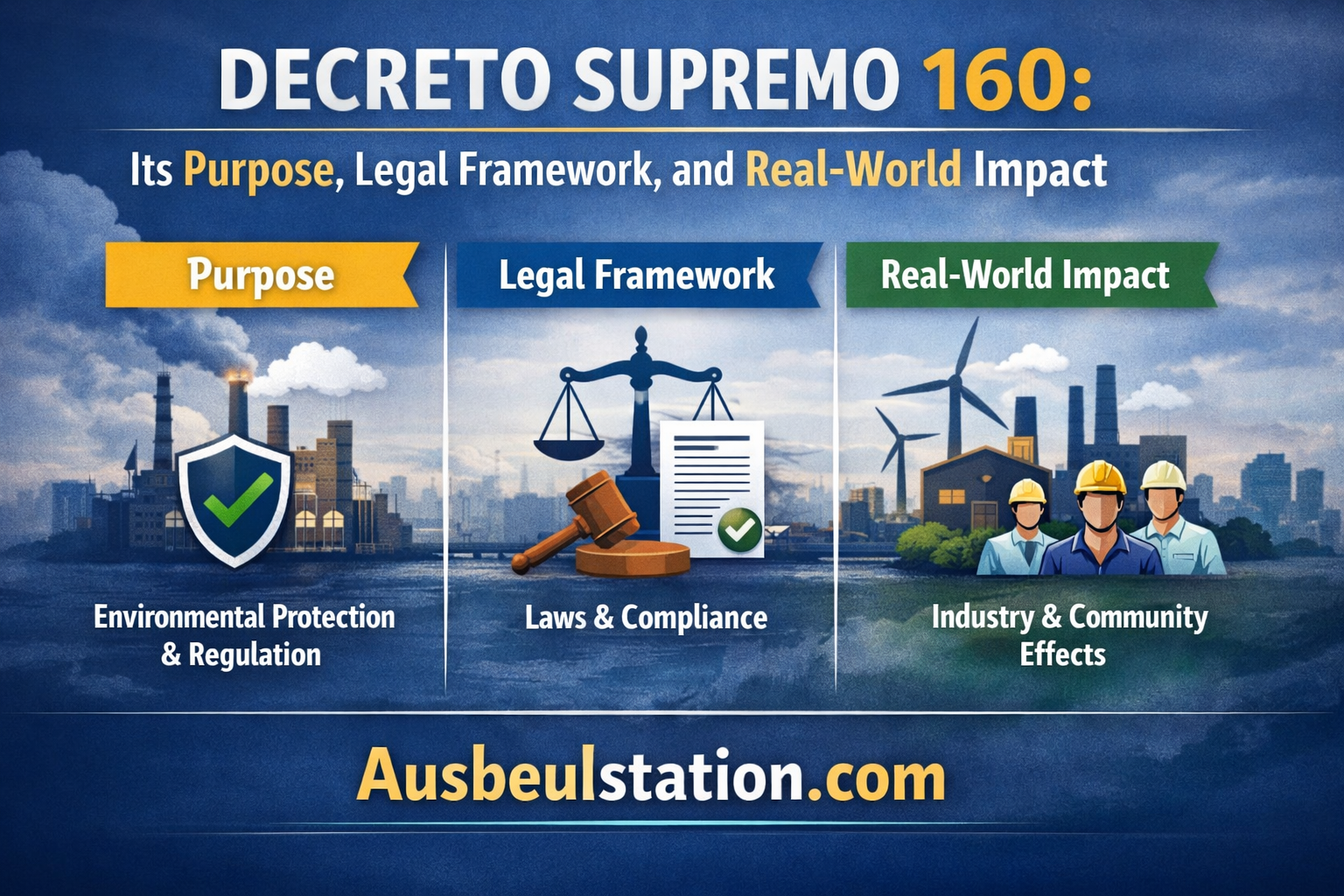
Decreto Supremo 160: Its Purpose, Legal Framework, and Real-World Impact
Decreto Supremo 160 is a significant legal instrument that has attracted attention among policymakers, businesses, legal professionals, and citizens due to its regulatory importance and practical implications. In many countries that operate under civil law systems, a Decreto Supremo represents an executive decree issued by the national government, typically signed by the president or head of state alongside relevant ministers. These decrees are designed to regulate specific sectors, implement existing laws, or introduce administrative measures necessary for governance.
The focus keyword decreto supremo 160 refers specifically to a decree that addresses regulatory standards, compliance procedures, and administrative oversight within a defined legal framework. While the precise scope may vary depending on national jurisdiction, such decrees generally aim to clarify obligations, improve operational safety, and ensure alignment between public policy goals and institutional practices. Understanding decreto supremo 160 requires examining its origins, objectives, legal authority, operational mechanisms, and broader social and economic consequences.
We will explore the meaning of decreto supremo 160, its historical background, legal significance, implementation strategies, compliance requirements, and the challenges faced by organizations and authorities during enforcement.
Historical Context Behind Decreto Supremo 160
Every major regulatory decree emerges from a particular historical and political context. Decreto supremo 160 was introduced in response to evolving administrative needs and regulatory gaps identified within governmental systems. Governments often enact supreme decrees when existing legislation requires operational clarification or when emerging risks demand immediate regulatory intervention.
Prior to decreto supremo 160, authorities may have relied on outdated regulatory standards that no longer reflected modern technological, environmental, or workplace realities. Rapid economic development, industrial growth, and increased public awareness of safety and compliance issues frequently push governments to modernize regulations. As industries expand and diversify, maintaining consistent standards becomes more challenging without updated legal frameworks.
The introduction of decreto supremo 160 represented an effort to harmonize policies across different sectors. Policymakers recognized the necessity of creating unified procedures that could reduce administrative confusion while strengthening institutional accountability. By codifying operational requirements into a supreme decree, governments ensured that implementation could occur quickly without waiting for lengthy legislative processes.
Historical analysis also shows that such decrees often arise after consultations with industry experts, labor organizations, regulatory agencies, and civil society groups. These consultations help shape balanced regulations that protect public interests while maintaining economic productivity.
Legal Nature and Authority of Decreto Supremo 160
Decreto supremo 160 requires recognizing its position within the legal hierarchy. In most legal systems, a supreme decree operates below constitutional law and parliamentary legislation but above administrative guidelines or internal regulations. It carries binding legal force and must be followed by both public institutions and private entities subject to its provisions.
The authority behind decreto supremo 160 comes from constitutional powers granted to the executive branch. These powers allow governments to implement and regulate laws efficiently, especially when detailed technical standards are required. While legislators may establish broad legal principles, executive decrees provide operational clarity by defining procedures, responsibilities, and enforcement mechanisms.
One of the defining characteristics of decreto supremo 160 is its enforceability. Failure to comply may result in administrative sanctions, financial penalties, operational restrictions, or legal proceedings. Therefore, organizations affected by the decree must carefully study its provisions and adapt their internal policies accordingly.
Additionally, supreme decrees often establish monitoring bodies or assign enforcement authority to existing regulatory agencies. These agencies play a crucial role in interpreting requirements, conducting inspections, and ensuring compliance across industries.
Objectives and Key Goals of Decreto Supremo 160
The primary purpose of decreto supremo 160 is to create structured regulatory oversight while promoting safety, transparency, and operational efficiency. Governments typically design such decrees around several interconnected objectives.
Decreto supremo 160 seeks to standardize procedures. Without consistent standards, organizations may interpret legal obligations differently, leading to uneven compliance levels. Standardization reduces uncertainty and improves regulatory predictability.
The decree aims to enhance safety and risk management. Whether addressing environmental protection, industrial operations, or administrative processes, the regulation establishes preventive measures that minimize accidents, hazards, or systemic failures.
Decreto supremo 160 promotes accountability. By clearly defining responsibilities among institutions, employers, and regulatory bodies, the decree ensures that failures can be traced and corrected effectively.
Another important goal involves modernization. Governments frequently use supreme decrees to align national regulations with international standards, technological advancements, and best practices recognized globally. This alignment helps improve competitiveness and encourages foreign investment by demonstrating regulatory reliability.
Core Provisions and Regulatory Requirements
Although the specific content of decreto supremo 160 may vary by jurisdiction, several common regulatory components typically appear within such decrees. These provisions form the operational backbone of the regulation.
One essential component involves compliance standards. Organizations must adopt defined procedures, maintain documentation, and implement safety protocols consistent with the decree’s requirements. Compliance often includes risk assessments, training programs, and periodic evaluations.
Another key provision concerns reporting obligations. Entities governed by decreto supremo 160 may be required to submit operational reports, incident notifications, or performance metrics to regulatory authorities. These reporting mechanisms enable continuous monitoring and help authorities identify potential risks before they escalate.
Inspection and auditing frameworks also play a central role. Regulatory agencies receive authority to conduct inspections, verify documentation, and evaluate operational conditions. Regular audits encourage organizations to maintain ongoing compliance rather than temporary adjustments before inspections.
Decreto supremo 160 typically outlines sanction systems. These penalties serve both corrective and deterrent purposes, ensuring that violations carry meaningful consequences while encouraging long-term adherence to legal standards.
Implementation Process and Institutional Responsibilities
Implementing decreto supremo 160 requires coordinated efforts between government institutions, regulatory agencies, and private organizations. Successful implementation depends not only on legal publication but also on effective communication, education, and administrative capacity.
Government ministries responsible for the regulated sector usually lead implementation efforts. They develop technical guidelines, training programs, and informational campaigns to help stakeholders understand new obligations. Clear communication is essential because complex regulatory language can create confusion if not properly explained.
Regulatory agencies then translate the decree into operational practices. Inspectors receive updated training, monitoring systems are established, and compliance schedules are introduced. Digital reporting platforms may also be implemented to simplify administrative procedures.
Organizations affected by decreto supremo 160 must conduct internal evaluations to identify gaps between existing practices and new regulatory requirements. This process often involves revising operational manuals, investing in employee training, and upgrading equipment or systems.
Implementation is rarely instantaneous. Transition periods are typically provided to allow institutions and businesses time to adapt without disrupting economic activity.
Impact on Businesses and Industry Operations
One of the most significant aspects of decreto supremo 160 lies in its impact on businesses. Regulatory changes influence operational costs, administrative responsibilities, and strategic decision-making.
In the short term, organizations may experience increased compliance expenses. These costs can include employee training, safety equipment upgrades, documentation systems, or consultancy services. Smaller enterprises sometimes face greater challenges due to limited financial resources.
However, long-term benefits often outweigh initial investments. Standardized regulations improve operational efficiency, reduce workplace accidents, and enhance organizational credibility. Companies that comply successfully may gain competitive advantages by demonstrating adherence to recognized standards.
Decreto supremo 160 can also improve market stability. When all industry participants operate under consistent rules, unfair competitive practices decline. Transparent regulations encourage investor confidence and promote sustainable economic growth.
Industries subject to international trade particularly benefit from alignment with global standards, as compliance facilitates exports and cross-border cooperation.
Social and Public Policy Implications
Beyond business considerations, decreto supremo 160 carries broader social implications. Regulations of this nature frequently aim to protect workers, consumers, and communities from preventable risks.
Improved safety standards help reduce workplace injuries and occupational hazards, contributing to better public health outcomes. Environmental protections embedded within regulatory frameworks safeguard natural resources and promote sustainable development.
Public trust in government institutions also increases when clear regulations are enforced consistently. Citizens gain confidence that authorities are actively managing risks and prioritizing public welfare.
Decreto supremo 160 often encourages a culture of responsibility. Organizations become more proactive in identifying risks, employees become more aware of safety practices, and regulators adopt data-driven approaches to governance.
Challenges and Criticisms Associated with Decreto Supremo 160
Decreto supremo 160 may face criticism during implementation. Regulatory reforms inevitably generate debate among stakeholders with differing priorities.
Some businesses argue that compliance requirements increase operational complexity and administrative burdens. Excessive documentation or rigid procedures can slow innovation if not balanced carefully with flexibility.
Another challenge involves enforcement consistency. If regulatory agencies lack sufficient resources or training, enforcement may vary across regions, creating uncertainty for organizations attempting to comply.
Legal interpretation disputes can also arise. Ambiguous language within a decree may require judicial clarification, leading to temporary uncertainty until courts establish precedent.
To address these challenges, governments often revise supplementary regulations, publish interpretive guidelines, or engage stakeholders in ongoing dialogue to refine implementation strategies.
Future Outlook and Regulatory Evolution
Regulations such as decreto supremo 160 are rarely static. As economic conditions, technologies, and social expectations evolve, governments periodically update or amend supreme decrees to maintain relevance.
Future developments may include digital compliance systems, automated reporting mechanisms, and stronger integration with international regulatory frameworks. Data analytics and artificial intelligence could play increasing roles in monitoring compliance and predicting risks.
Stakeholder participation will remain essential. Businesses, professional associations, labor organizations, and academic institutions contribute valuable feedback that helps regulators adapt policies effectively.
The long-term success of decreto supremo 160 ultimately depends on balancing regulatory rigor with practical feasibility. Effective governance requires rules that protect society while enabling innovation and economic development.
Conclusion
Decreto supremo 160 represents more than a technical legal document; it is a comprehensive regulatory framework designed to strengthen governance, ensure safety, and promote accountability across institutions and industries. By clarifying operational standards, establishing enforcement mechanisms, and aligning practices with modern requirements, the decree plays a vital role in shaping organizational behavior and public policy outcomes.
Understanding decreto supremo 160 involves recognizing its historical origins, legal authority, implementation processes, and multifaceted impacts on businesses and society. While challenges may arise during enforcement, the overall objective remains clear: creating a structured environment where economic growth, public safety, and institutional transparency can coexist.
As regulatory systems continue to evolve worldwide, decreto supremo 160 stands as an example of how executive governance tools can address complex administrative needs while guiding nations toward sustainable and responsible development.