Ausbeulstation: Its Purpose, Benefits, and Modern Applications
The term ausbeulstation may sound technical at first, but it plays an important role in industries where surface restoration and repair are essential. Originating from the German words “ausbeulen” (to remove dents) and “Station” (station or facility), an ausbeulstation generally refers to a specialized workstation or setup designed for repairing dents, deformations, or surface damage — most commonly in automotive and metalworking contexts. As vehicle ownership and industrial manufacturing continue to expand globally, the importance of efficient repair solutions such as the ausbeulstation has grown significantly.
This article explores what an ausbeulstation is, how it works, its practical uses, and why it remains a vital component in modern repair environments.
What Is an Ausbeulstation?
Ausbeulstation is essentially a designated workspace equipped with tools and technologies for dent removal and surface reshaping. It is commonly found in automotive repair shops, bodywork facilities, and manufacturing plants where metal panels or surfaces may suffer impact damage. Rather than replacing damaged components entirely, professionals use an ausbeulstation to restore the original shape, saving time and resources.
The station can range from a simple setup with handheld tools to a highly sophisticated environment incorporating hydraulic equipment, heat application systems, and digital measuring devices. Regardless of complexity, the primary goal remains the same: efficient and precise restoration of damaged surfaces.
Key Components of an Ausbeulstation
While the exact configuration may vary depending on the industry, a typical ausbeulstation includes several essential elements:
-
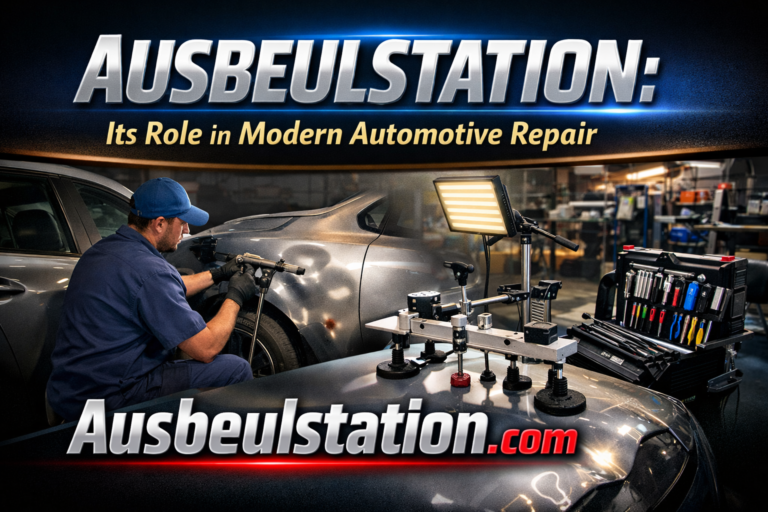
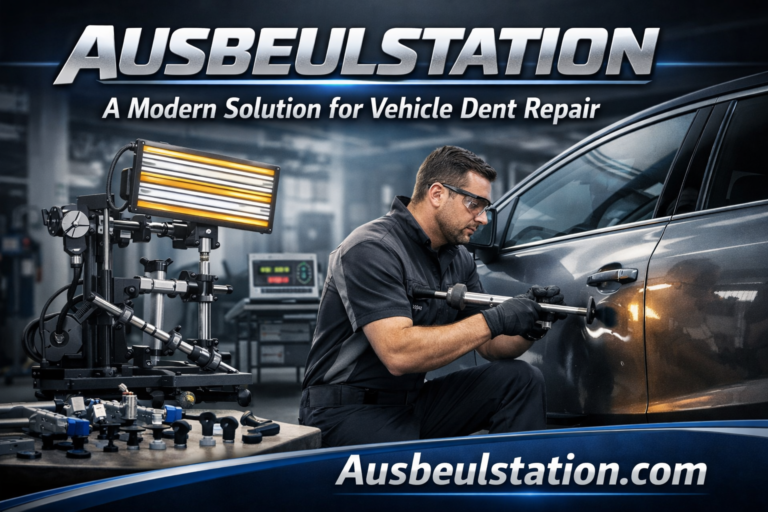
Dent Removal Tools: These include hammers, pulling rods, suction devices, and specialized levers designed to reshape metal without causing additional damage.
-
Lighting Systems: Bright, angled lighting helps technicians detect subtle imperfections in surfaces.
-
Measuring Equipment: Digital or manual gauges ensure that the repaired surface meets original specifications.
-
Support Structures: Sturdy worktables or vehicle frames hold the object steady during repair.
-
Safety Gear: Protective gloves, goggles, and ventilation systems maintain a safe working environment.
Modern stations may also integrate advanced features like computerized diagnostics and paintless dent repair (PDR) technology, reflecting how the field continues to evolve.
Applications in the Automotive Industry
The automotive sector is where the concept of the ausbeulstation is most widely recognized. Minor accidents, hailstorms, and everyday wear often leave vehicles with dents and distortions. Instead of replacing entire body panels, technicians utilize the ausbeulstation to carefully restore them.
One particularly valuable technique is paintless dent repair, which allows technicians to remove dents without repainting the surface. This approach reduces repair costs, shortens turnaround times, and preserves the vehicle’s original finish. For customers, it means quicker service and lower expenses, while workshops benefit from increased efficiency.
Insurance companies often encourage repairs at specialized stations because restoring parts instead of replacing them aligns with sustainability and cost-control goals.
Industrial and Manufacturing Uses
The ausbeulstation also finds applications in broader industrial contexts. Manufacturers working with metal sheets, pipelines, or structural components may encounter deformation during production or transportation. A dedicated station ensures these issues can be corrected quickly without halting operations.
Construction and heavy machinery sectors, maintaining precise surface integrity is critical for safety and performance. An ausbeulstation enables technicians to address defects promptly, minimizing downtime and maintaining product quality.
Advantages of Using an Ausbeulstation
The widespread adoption of ausbeulstations is driven by several clear advantages:
-
Cost Efficiency: Repairing rather than replacing components reduces material costs.
-
Time Savings: Streamlined processes speed up maintenance and restoration work.
-
Environmental Benefits: Fewer discarded parts mean less waste and a smaller environmental footprint.
-
Improved Precision: Dedicated tools and setups allow for highly accurate results.
-
Versatility: Stations can be adapted for different materials and damage levels.
These benefits illustrate why the ausbeulstation is valued across multiple industries.
Technological Evolution
As technology advances, the concept of the ausbeulstation continues to transform. Automation, digital scanning, and AI-driven analysis are beginning to influence repair workflows. Technicians can now map surface damage in three dimensions and plan restoration strategies with greater accuracy.
Robotic assistance and data-driven diagnostics are also emerging trends. These innovations not only enhance precision but also reduce physical strain on workers. Over time, the ausbeulstation may become an even more integrated part of smart workshops and Industry 4.0 environments.
Training and Expertise
Despite technological improvements, the effectiveness of an ausbeulstation still depends heavily on skilled professionals. Proper training ensures technicians understand material properties, tool handling, and safety protocols. Apprenticeships, vocational education, and continuous professional development all contribute to maintaining high standards in repair quality.
Human judgment and craftsmanship remain irreplaceable aspects of dent restoration. Even with automated tools, experienced technicians provide the insight needed to achieve optimal results.
Read More: Ausbeulstation: Its Role in Modern Automotive Repair
Conclusion
The Ausbeulstation represents more than just a workstation — it symbolizes efficiency, sustainability, and precision in repair and manufacturing environments. From automotive workshops to industrial facilities, it enables professionals to restore damaged surfaces while conserving resources and reducing costs. Its evolution through modern technology further highlights its relevance in a rapidly advancing world.
Understanding the role and benefits of an ausbeulstation helps illustrate how specialized repair solutions contribute to both economic and environmental sustainability. As industries continue to prioritize smart resource use and high-quality maintenance practices, the ausbeulstation is likely to remain an essential element of modern technical infrastructure.