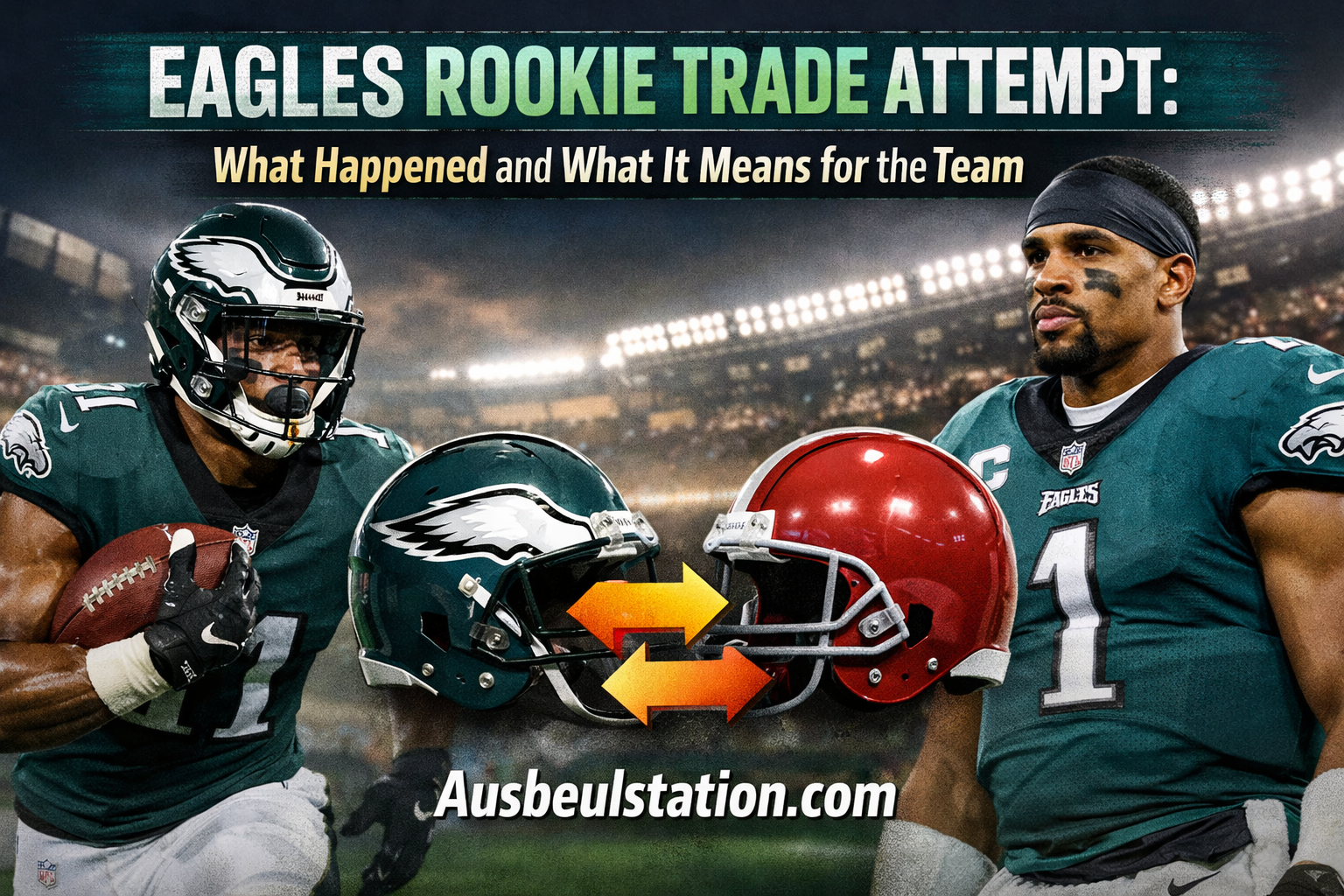
Eagles Rookie Trade Attempt: What Happened and What It Means for the Team
The eagles rookie trade attempt has recently become a topic of discussion among football fans, analysts, and sports media. The world of professional football is constantly evolving, and teams are always looking for ways to strengthen their rosters. Trades, especially those involving rookies, can be risky but also potentially rewarding. When a franchise considers trading a rookie player—someone who has barely begun their professional career—it often sparks debate about strategy, talent evaluation, and the long-term vision of the organization.
We will explore the details surrounding the eagles rookie trade attempt, examine why teams sometimes consider trading rookies so early in their careers, and analyze what such decisions could mean for the future of the franchise.
The Context of the Eagles Rookie Trade Attempt
The eagles rookie trade attempt refers to a situation in which the Philadelphia Eagles reportedly explored the possibility of trading a newly drafted or recently acquired rookie player. While rookie trades are not unheard of in the National Football League (NFL), they are relatively rare compared to trades involving veteran players. This is largely because rookies represent potential—they are often selected through the draft based on their perceived future value rather than their immediate performance.
When a team like the Eagles considers trading a rookie, it usually indicates a larger strategic decision. The coaching staff and front office might believe that the player does not fit into their long-term plans, or they may see an opportunity to acquire another asset that better suits their needs. In some cases, a rookie trade attempt is simply part of exploratory discussions between teams rather than a serious move that is likely to happen.
The idea that a rookie could be traded so soon raises questions about scouting decisions, roster depth, and team priorities.
Why NFL Teams Consider Trading Rookies
To fully understand the eagles rookie trade attempt, it is important to consider why teams might choose to trade a rookie player in the first place. Drafting players is one of the most important aspects of building a successful team, but even the best scouting departments cannot always predict how a player will fit within a specific system.
Sometimes a rookie may struggle to adapt to the pace or complexity of the professional game. Other times, the team may discover that it already has stronger players at the same position, making it difficult for the rookie to find playing time. In these situations, the organization might consider trading the rookie to a team that has a greater need at that position.
Another reason for a rookie trade attempt is roster flexibility. Teams must manage a limited number of roster spots and salary cap constraints. If a rookie is unlikely to contribute immediately, the front office might see value in converting that asset into a draft pick or another player who can make a more immediate impact.
The eagles rookie trade attempt could reflect any of these strategic considerations.
The Philadelphia Eagles’ Approach to Team Building
The Philadelphia Eagles have long been known for their strategic and sometimes aggressive approach to roster management. Over the years, the franchise has demonstrated a willingness to make bold decisions when it believes those moves will improve the team’s chances of winning.
The front office, led by experienced executives and supported by extensive scouting networks, constantly evaluates players both within the organization and across the league. The eagles rookie trade attempt fits within this broader philosophy of continuous evaluation and adjustment.
Rather than simply holding onto every drafted player, the Eagles may view rookies as assets that can be leveraged in different ways. In some cases, keeping the player is the best option. In others, trading that player could help the team address a more urgent need.
This approach can sometimes appear surprising to fans, especially when the player in question was drafted only months earlier. However, in the competitive environment of the NFL, adaptability is often a key factor in long-term success.
Fan Reactions to the Eagles Rookie Trade Attempt
Whenever news of a potential trade surfaces, fans naturally react with curiosity and sometimes concern. The eagles rookie trade attempt has generated discussion across sports forums, social media platforms, and sports talk shows.
Some fans worry that trading a rookie too quickly could mean the team is giving up on a player before he has had a fair opportunity to develop. Rookies often require time to adjust to the professional level, and many successful NFL players did not shine during their first season.
On the other hand, some supporters trust the judgment of the coaching staff and front office. They believe that if the Eagles considered trading a rookie, there must be a strategic reason behind the decision.
These differing perspectives highlight the emotional investment that fans have in their teams and players. Every roster move carries implications not only for the team’s performance but also for the expectations of the fan base.
The Risks and Rewards of Rookie Trades
The eagles rookie trade attempt also illustrates the broader risks and rewards associated with trading young players. Because rookies have limited professional experience, their true potential is often uncertain. This uncertainty makes rookie trades both intriguing and risky.
If a team trades a rookie who later becomes a star elsewhere, the move could be remembered as a major mistake. Conversely, if the player fails to develop as expected, the team that traded him may appear wise for moving on early.
Front offices must carefully evaluate factors such as athletic ability, work ethic, adaptability, and fit within the team’s system. These evaluations require input from coaches, scouts, and analysts who study player performance in great detail.
In the case of the eagles rookie trade attempt, the team likely considered a wide range of information before exploring the possibility of a trade.
The Role of Preseason and Training Camp Evaluations
Training camp and preseason games often play a major role in shaping roster decisions. During this period, coaching staffs observe how rookies perform in practices, scrimmages, and exhibition games against other teams.
The eagles rookie trade attempt may have been influenced by these evaluations. Coaches might have identified strengths and weaknesses that were not fully apparent during the college scouting process.
Sometimes a rookie who looked promising during the draft process struggles to adapt to the team’s playbook or to the physical demands of the NFL. In other cases, another player on the roster may outperform expectations, reducing the need for the rookie.
These evaluations can lead teams to reconsider earlier decisions and explore options such as trades, practice squad placements, or roster adjustments.
Media Coverage and Speculation
Sports media plays a significant role in amplifying stories like the eagles rookie trade attempt. Reports from journalists, insiders, and analysts often spread quickly, leading to widespread speculation about what the team might do next.
However, it is important to remember that not every reported trade discussion results in an actual transaction. Teams frequently explore possibilities behind the scenes, contacting other organizations to gauge interest in certain players.
These conversations are part of the normal business of running an NFL franchise. While they can generate headlines, many of them never progress beyond the early stages of discussion.
As a result, the eagles rookie trade attempt might simply represent an exploratory move rather than a definitive plan to move the player.
Potential Impact on the Eagles’ Season
If a rookie trade were to occur, it could have several implications for the team’s upcoming season. The eagles rookie trade attempt might be connected to efforts to strengthen a particular position group or acquire additional draft capital.
For example, trading a rookie could allow the team to obtain a veteran player who provides immediate experience and leadership. Alternatively, the team might receive future draft picks that could help build a stronger roster in the years ahead.
The impact of such a move would depend largely on the players or assets involved in the trade. In some cases, these deals have little immediate effect on the team’s performance. In others, they can significantly reshape the roster.
Lessons from Past NFL Rookie Trades
History offers several examples of rookie trades that had lasting effects on teams and players. Some rookies who were traded early in their careers went on to become key contributors for their new teams. Others struggled to find success regardless of where they played.
These examples illustrate the unpredictable nature of professional sports. The eagles rookie trade attempt fits within this broader history of teams making bold decisions in pursuit of improvement.
Ultimately, every trade is a calculated gamble. Teams must balance the potential benefits against the risks of losing a player who might eventually develop into a star.
Read More: Plum Island Southold NY 11957: History, Science, and the Mystery of a Restricted Island
Conclusion
The eagles rookie trade attempt highlights the complex decision-making processes that occur behind the scenes in professional football. While fans often focus on the excitement of games and star players, the reality is that building a successful team involves constant evaluation, negotiation, and strategic planning.
Whether the trade attempt ultimately results in a deal or not, it reflects the Eagles’ willingness to explore different options to improve their roster. Rookie trades may be uncommon, but they demonstrate how teams are always searching for the best possible combination of talent, experience, and potential.
For fans and analysts alike, the eagles rookie trade attempt serves as a reminder that the NFL is not just about what happens on the field—it is also about the decisions made in meeting rooms, scouting departments, and front offices across the league. As the season progresses, observers will continue to watch closely to see how these strategic choices shape the future of the Philadelphia Eagles.