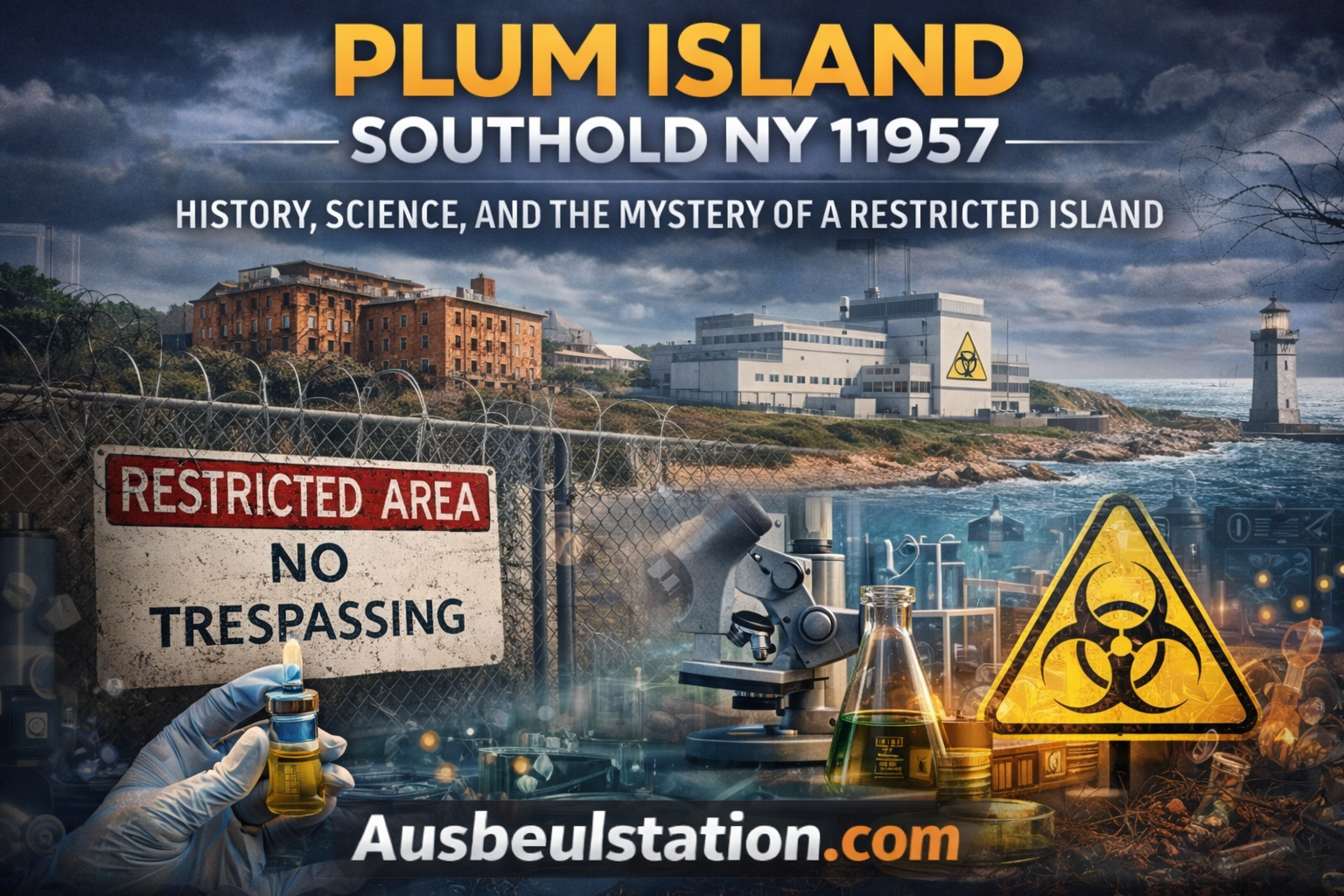
Plum Island Southold NY 11957: History, Science, and the Mystery of a Restricted Island
Plum Island located just off the northeastern coast of Long Island, New York, is one of the most intriguing and restricted places in the United States. Known officially by its postal designation plum island southold ny 11957, this small island has captured public curiosity for decades. With its unique history, scientific research facilities, and limited public access, Plum Island has become the subject of countless discussions, rumors, and scientific interest. From its strategic military use during the early 20th century to its later role as a major research center for animal diseases, Plum Island holds a fascinating place in American history.
Although it is only a short distance from the town of Southold in Suffolk County, the island remains largely closed to the public. The presence of the Plum Island Animal Disease Center (PIADC) has made the location one of the most secure scientific research sites in the country. Over time, this has fueled curiosity about what happens on the island and why it remains so tightly controlled. Understanding plum island southold ny 11957 requires looking at its history, its scientific significance, and the ongoing discussions about its future.
Geographic Location and Natural Environment
Plum Island lies at the eastern end of Long Island, between Orient Point, New York, and the coast of Connecticut. It sits in the waters of Long Island Sound, making it geographically close to the mainland while still isolated enough to serve specialized purposes. The island covers roughly 840 acres and features coastal terrain, forests, marshes, and open fields.
The location of plum island southold ny 11957 is particularly important because its isolation provides a natural barrier that helps protect mainland areas from potential exposure to the animal diseases studied there. The surrounding water acts as a buffer zone, which is one reason the island was selected for sensitive research activities.
In addition to its scientific importance, Plum Island is also home to a variety of wildlife. Migratory birds frequently stop there, and the island’s ecosystems include diverse plant and animal species. Because public access has been limited for decades, much of the natural environment has remained relatively undisturbed compared to other areas along Long Island’s coast.
Early History of Plum Island
Long before it became known as plum island southold ny 11957, the island had a much simpler role in regional history. Native American tribes inhabited parts of Long Island for centuries, and they were likely familiar with the island and its surrounding waters. Later, European settlers arrived in the region during the 17th century, including English colonists who established communities in nearby Southold.
During the colonial period, Plum Island was used mainly for agriculture and grazing livestock. Farmers from the mainland would bring animals to the island to graze on its open land. The island’s name is believed to come from the abundance of beach plum shrubs that grew along its coastline.
Plum Island became important for navigation. The Plum Island Lighthouse was built in 1869 to help guide ships traveling through Long Island Sound. The lighthouse served as a critical landmark for maritime traffic, ensuring safer passage for vessels navigating the busy waters between New York and New England.
Military Use During the Early 20th Century
The strategic location of Plum Island eventually caught the attention of the United States government. In the late 1800s and early 1900s, the island was developed as a military defense site. Known as Fort Terry, the installation was built to help protect the eastern approaches to New York Harbor.
Fort Terry was equipped with artillery batteries, barracks, and defensive infrastructure designed to guard against potential naval attacks. Soldiers stationed there were responsible for monitoring activity in Long Island Sound and ensuring the safety of nearby coastal communities.
The military importance of the island gradually declined after World War I. Advances in warfare technology and shifting defense strategies reduced the need for coastal artillery installations. By the mid-20th century, the military presence on the island was phased out, opening the door for a completely different kind of mission.
The Creation of the Plum Island Animal Disease Center
One of the most significant developments in the history of plum island southold ny 11957 came in 1954 when the U.S. Department of Agriculture established the Plum Island Animal Disease Center (PIADC). The facility was created to study highly contagious animal diseases that could threaten livestock populations and food supplies.
The research conducted on the island focuses primarily on foreign animal diseases that do not naturally occur in the United States. One of the most well-known examples is foot-and-mouth disease, a highly contagious virus that affects cattle, pigs, sheep, and other cloven-hoofed animals.
Because these diseases could have devastating economic consequences if they spread, strict safety measures are necessary. The isolated location of Plum Island makes it an ideal place for this type of research, allowing scientists to study dangerous pathogens while minimizing risks to agriculture and the public.
Over the decades, the Plum Island Animal Disease Center has played a crucial role in protecting American livestock industries. Scientists working there develop vaccines, diagnostic tools, and strategies to detect and prevent disease outbreaks.
Security and Restricted Access
Unlike most islands along the Long Island coastline, plum island southold ny 11957 is not open to tourists or residents. Access is strictly controlled, and only authorized personnel are allowed to travel to the island.
Transportation to Plum Island is typically handled through government-operated ferries departing from Orient Point, New York. These ferries carry scientists, researchers, and support staff who work at the facility.
The restricted nature of the island has led to decades of speculation and conspiracy theories. Some rumors have suggested secret biological experiments or hidden government activities. However, official sources consistently state that the island’s work focuses on animal disease research and national agricultural security.
While curiosity about the island continues to grow, the strict safety and security measures are primarily designed to ensure that dangerous pathogens remain contained.
Scientific Contributions and Research Achievements
The work carried out at plum island southold ny 11957 has had a major impact on veterinary science and agricultural protection. Researchers at the Plum Island Animal Disease Center have developed important diagnostic techniques and vaccines that help safeguard livestock industries around the world.
One of the key responsibilities of the facility is monitoring potential foreign animal diseases that could enter the United States through international trade or travel. Early detection and rapid response are essential for preventing widespread outbreaks.
Scientists at the center collaborate with universities, government agencies, and international research organizations. These partnerships help advance global knowledge about animal diseases and improve preparedness for potential epidemics.
The research conducted on Plum Island has helped protect billions of dollars in agricultural production while ensuring the stability of food systems.
Environmental Importance and Wildlife Preservation
Although much of the attention surrounding plum island southold ny 11957 focuses on its research facilities, the island is also an important ecological area. Because human activity has been limited for decades, large portions of the island have remained relatively untouched by development.
This has allowed natural habitats to thrive. Birdwatchers and environmental scientists have long recognized Plum Island as an important location for migratory birds. The surrounding waters also support marine life common to Long Island Sound.
Conservationists have expressed interest in preserving parts of the island as wildlife refuges in the future. The combination of forests, wetlands, and coastal ecosystems makes it a valuable site for environmental protection and scientific study.
Plans for Closure and Future Developments
The future of plum island southold ny 11957 has been the subject of significant discussion. The U.S. government announced plans to move the Plum Island Animal Disease Center’s operations to a new facility known as the National Bio and Agro-Defense Facility (NBAF) in Manhattan, Kansas.
The transition is part of a broader effort to modernize research infrastructure and expand capabilities for studying animal diseases and biosecurity threats.
As research activities gradually shift away from Plum Island, questions have emerged about what will happen to the island itself. Various proposals have been suggested, including conservation projects, historical preservation, and limited development.
Some organizations have advocated turning the island into a national wildlife refuge, while others believe parts of it could be used for educational or research purposes.
Public Fascination and Cultural Impact
Despite its restricted status, plum island southold ny 11957 has become a topic of fascination in books, documentaries, and online discussions. The combination of secrecy, scientific research, and government involvement has made the island a frequent subject of speculation.
Several authors have written about Plum Island’s mysterious reputation, and the island has appeared in fictional stories and thrillers. These portrayals often blend fact and imagination, contributing to the public’s curiosity.
The rumors and theories, the real story of Plum Island is one of scientific research and national preparedness. The work conducted there has played an important role in protecting agriculture and public health.
Read More: Nicole Flenory Net Worth: A Closer Look at Her Life, Career, and Financial Standing
Conclusion
Plum Island is far more than just a mysterious island off the coast of Long Island. Officially known as plum island southold ny 11957, it represents a unique blend of history, science, and environmental significance. From its early days as farmland and a lighthouse station to its transformation into a major research facility, the island has served several important roles throughout American history.
The Plum Island Animal Disease Center has been a critical part of efforts to prevent the spread of dangerous livestock diseases, helping protect food systems and agricultural economies. At the same time, the island’s isolation and restricted access have fueled public curiosity and speculation for decades.
As research operations transition to new facilities and discussions about the island’s future continue, Plum Island remains an important landmark in both scientific and regional history. Whether it becomes a conservation area, research center, or historical site, the legacy of plum island southold ny 11957 will continue to capture attention and interest for many years to come.